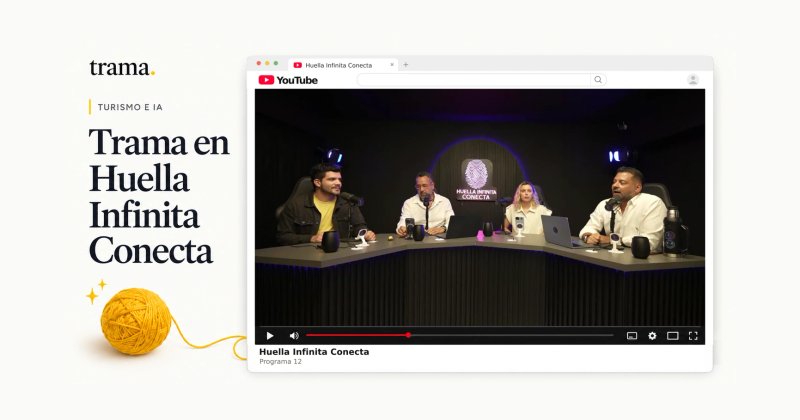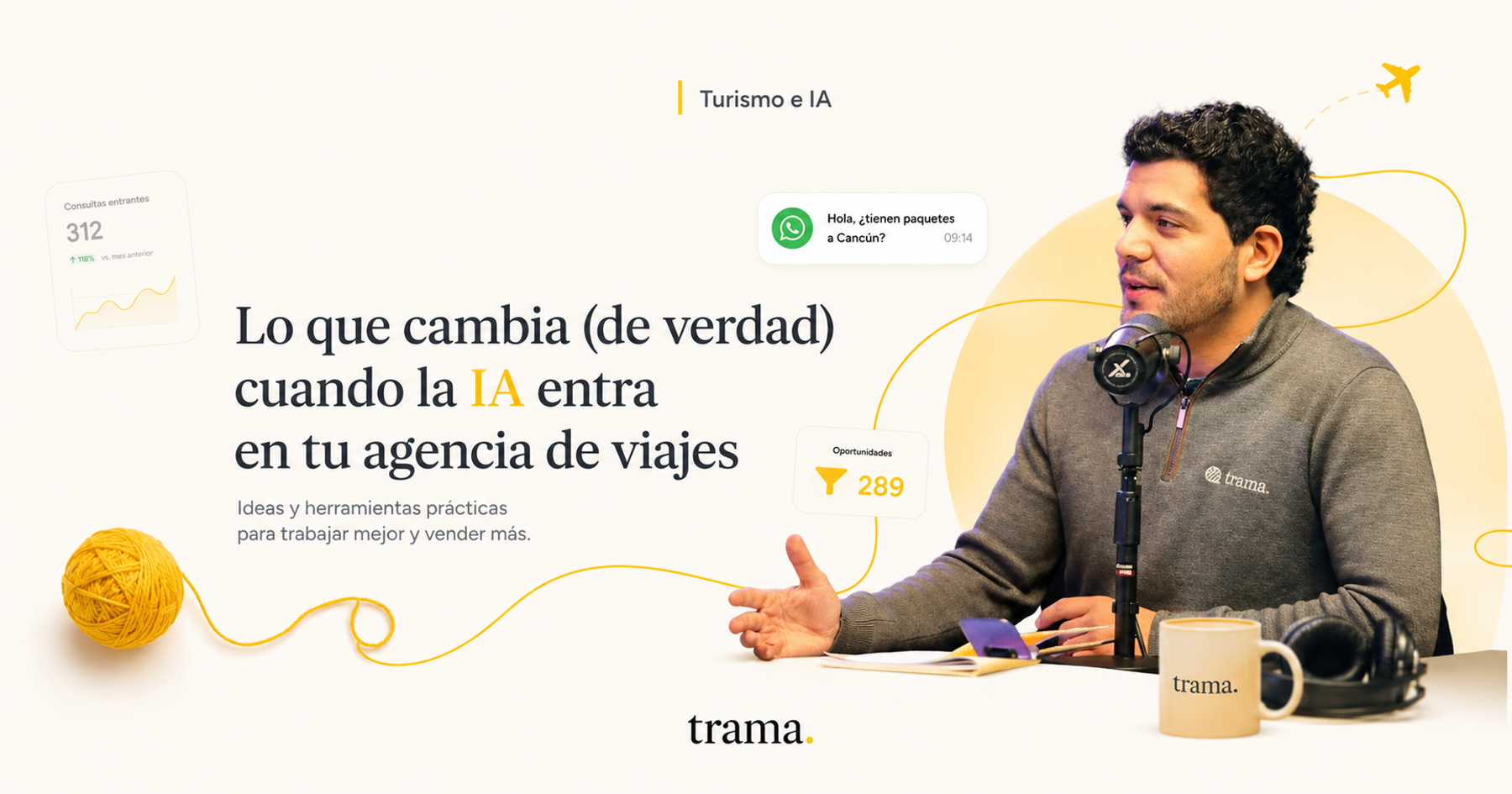
A few days ago I joined the first episode of Huella Infinita Conecta, the new live show that airs every Thursday from 10:30 to noon. It turned into a long conversation around a single question, the one almost every agency is asking right now: what actually changes day to day when artificial intelligence enters the picture.
You can watch the full segment on YouTube.
What we talked about
These are the points that landed the most, summed up so you can use them this week.
AI doesn't replace the agent. It gives the human part back
I said it on the show and I stand by it: AI isn't here to take your job, it's here to take the machine part. The part that keeps you in front of a screen all day building spreadsheets and entering data. Closing a sale still happens between people. Travel is one of the most human things there is, and that part doesn't get automated. What can be removed is everything that steals the time you need to serve clients well.
The problem isn't AI. It's using it like an amateur
When someone says AI gives them generic answers, it's almost always about how they ask. A good request has three parts: context (who you are, what you sell), task (what you want exactly), and tone (how it should sound). That's how you break out of the mold. It's the difference between flyers that all look the same and a piece that looks like yours.
Stop losing two hours building a spreadsheet or a PDF
A lot of agencies still burn an afternoon putting a quote together by hand, with screenshots from the operator, hiding prices, typing every detail one by one. Asked the right way, that takes minutes. The time goes into explaining what you want, not into the assembly. And once you have your format, you reuse it for the next client instead of starting over.
For the data that matters, don't trust the first answer
AI makes things up sometimes. If you need information to make a decision, use the deep research features, which go through many sources before answering. Google's NotebookLM is built more for that and tends to be more reliable when comparing material. The rule is simple: when the data matters, check it.
The gold mine is already in your WhatsApp
You don't need to start from scratch. The inquiries, the records, and the client base you already have on WhatsApp are the raw material. The patterns live in there: what people ask, where deals fall through, what the market is asking for that you're not selling yet. That's the part almost no one looks at, because it's buried under the daily grind.
Where to start
If you haven't used it seriously yet, pick one tool (ChatGPT, Claude, or Gemini), get a small plan, and try one real task this week. Build a quote, a text for Instagram, an email that's hard to write. Over time you'll end up using a bit of each, depending on the job. The point is to start with real work, not a toy test.
At Trama we put this into practice on the commercial side. An assistant handles and organizes the inquiries that come in through WhatsApp, records everything as it happens (contacts, quotes, what was won and what was lost), and gives the team visibility into the operation, like adding one more person. Either way, everything above you can start on your own today, without installing anything.
One idea stayed with me after the show. Agencies won't disappear because of AI. The ones in trouble will be those still competing on price alone, without putting forward the human part that technology still can't deliver. That part is still yours.

Yaco Peralta
Co-founder & CEO, trama.
Construyendo trama. para que las agencias de viajes vuelvan a tener foco en la asesoría humana.
More posts by Yaco Peralta