A travel agency can answer a WhatsApp inquiry in minutes and lose the opportunity a few days later because no one followed up. That is why applying artificial intelligence to sales means connecting the initial response with what comes next: understanding what the traveler wants, recording the opportunity, sending a quote, and keeping the conversation going.
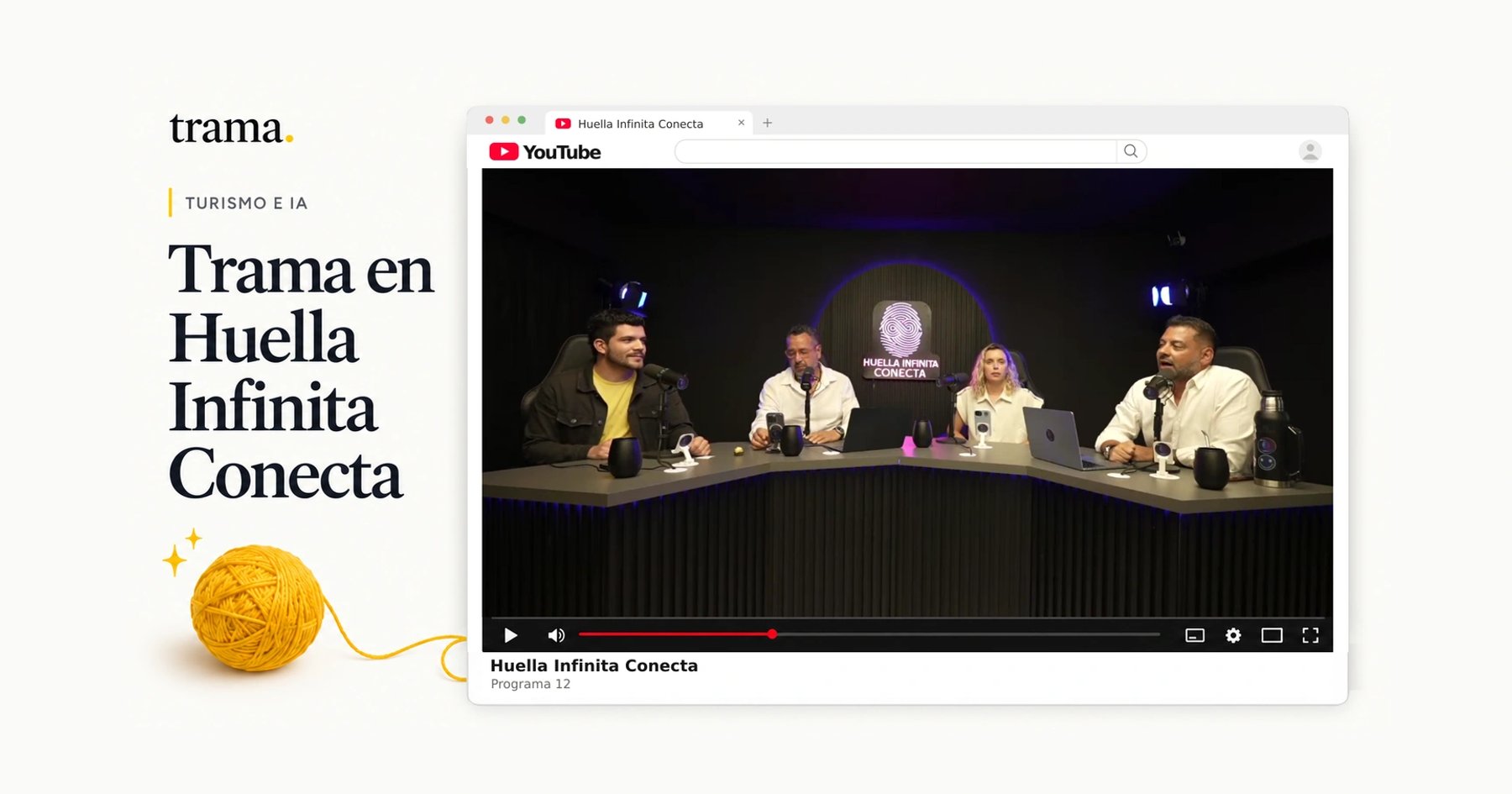
On September 17, 2026, I returned to Huella Infinita Conecta to share how we are working on that process at Trama. In episode 12, “The tourism people are looking for,” we discussed WhatsApp inquiries, sales follow-up, and examples from travel agencies. Here are the ideas from our conversation that can help you review your own operation.
You can watch the full episode on YouTube. The player starts at 0:51, at the beginning of the conversation.
How to turn an inquiry into a sales opportunity
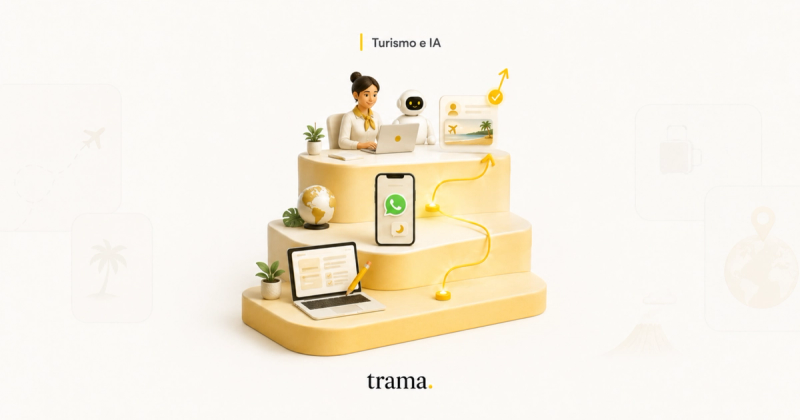
AI’s first job is to help understand the inquiry. In the example we shared, Trama responds using information about the business and travel-industry knowledge, gathers context about what the traveler is looking for, and passes a qualified opportunity to the team. A sales agent can then take over the conversation, offer advice, and send a quote.
The difference lies in what the sales agent receives. If they have to ask all the same questions again, some of the work is duplicated. A useful opportunity should give them a clear view of what has been discussed, what the traveler needs, and what still needs to be resolved before moving forward. Alongside response time, that is a good way to assess how well initial inquiries are handled.
To apply this at your agency, review a few recent inquiries: did the team receive enough context to offer advice, or did they have to piece together each conversation? That can reveal a specific need to address with AI.
Recording what happens on WhatsApp without entering everything twice
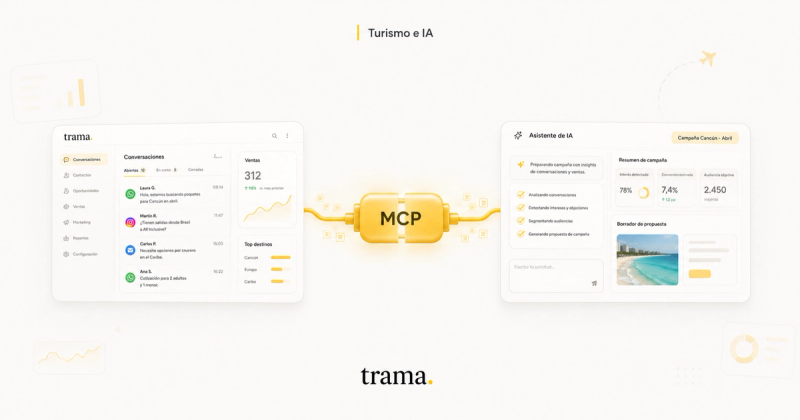
With automatic recordkeeping, the team can keep working on WhatsApp while Trama organizes the sales information, without having to open another system and update it every time a quote is sent. That makes it possible to revisit a conversation and see which proposal was sent, to whom, and where things stand.
The value of those records becomes clear when you need to make a decision. Which quotes are still open? Which conversations need attention? What happened to an opportunity? If answering means manually searching through chats and spreadsheets, the information exists, but it is hard to use.
I also shared the example of a team that had connected its numbers to record activity and query its data through ChatGPT, even to work on projections for the following month. It showed what becomes possible when day-to-day activity is recorded. The usefulness of any analysis depends on how accurately those records reflect what is happening.
Following up after sending a quote
Sending a proposal leaves an opportunity open. Follow-ups after two and seven days, reports for the agency owner, and inquiries that have gone unanswered for too long were some of the examples we shared. Each agency needs to choose a cadence that suits its process and the traveler.
Linking a quote to its opportunity, seeing when the client opened it, and identifying when a conversation needs to be reassigned help the team decide what to do next. Opening a proposal does not, on its own, confirm that the traveler will buy.
A quick review of your open quotes should tell you:
- Which proposal each traveler received and when it was sent.
- When the last contact took place and what is still outstanding.
- Who on the team needs to pick up the conversation.
- What the next step is: answering a question, adjusting the proposal, or getting back in touch.
AI can help organize that follow-up. Sales judgment still matters: useful follow-up should take into account what the traveler has already said and add something to the conversation.
What to measure to see whether AI improves your sales
During the episode, I shared examples of clients who had gone from converting 5% to 15% of their qualified opportunities. The calculation excluded general inquiries that only asked for information or a price. Those results came from those particular cases and the work of their teams; they are not a guarantee that every agency will achieve the same conversion rate.
If you want to assess changes at your agency, first define what counts as a qualified opportunity and keep that definition consistent when comparing periods. Measure it separately from total inquiries. That lets you see whether your sales process is improving without grouping very different types of conversation together.
Why AI needs to understand how a travel agency works
A travel agency, a winery, and an excursion provider may all receive inquiries on WhatsApp, but they sell different products and need different information to advise their customers. At Trama, we chose to focus on tourism after exploring other sectors so we could develop a deeper understanding of those tasks and needs.
When assessing an AI solution, test it with real situations from your business: what it knows about your offering, what information it needs to ask for, and how it recognizes when to hand the conversation over to a person. Its specialization should show in those responses and in how it fits into the team’s work.
What to review first in your sales process
Take a selection of recent inquiries and quotes and follow them through the whole process. Look for where information gets lost or follow-up breaks down:
- Inquiry handling: do inquiries receive a useful response?
- Qualification: does the sales agent know what the traveler is looking for before taking over the conversation?
- Recordkeeping: can you find the proposal that was sent and its current status?
- Follow-up: is it clear who should pick up each opportunity and why?
- Measurement: do you use the same definition of an opportunity when comparing results?
Choose the point where that process currently breaks down and start there. That gives you a specific problem to solve and a way to check whether AI is helping the team. At Trama, we work on that connection between inquiries, sales information, and follow-up so travel agents can devote more attention to advising their clients.
For a broader overview, read our guide to getting started with artificial intelligence at a travel agency.
In our first appearance on Huella Infinita Conecta, we talked about the human side of being a travel agent. This return visit let us apply that idea to the sales process: which tasks AI can support and what information the team needs to provide better service. The full episode is available in the video in this article.

Yaco Peralta
Co-founder & CEO, trama.
Construyendo trama. para que las agencias de viajes vuelvan a tener foco en la asesoría humana.
More posts by Yaco Peralta